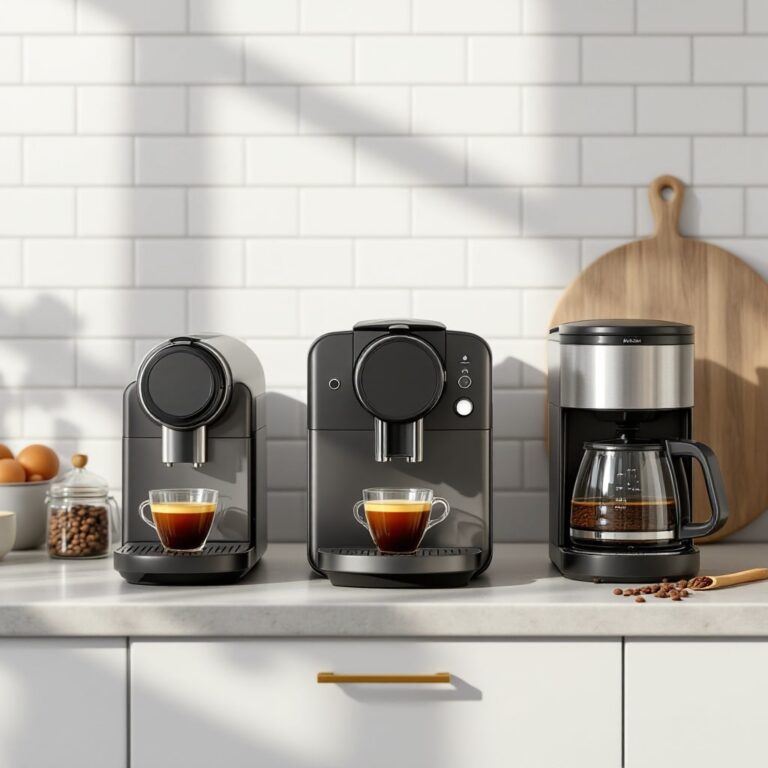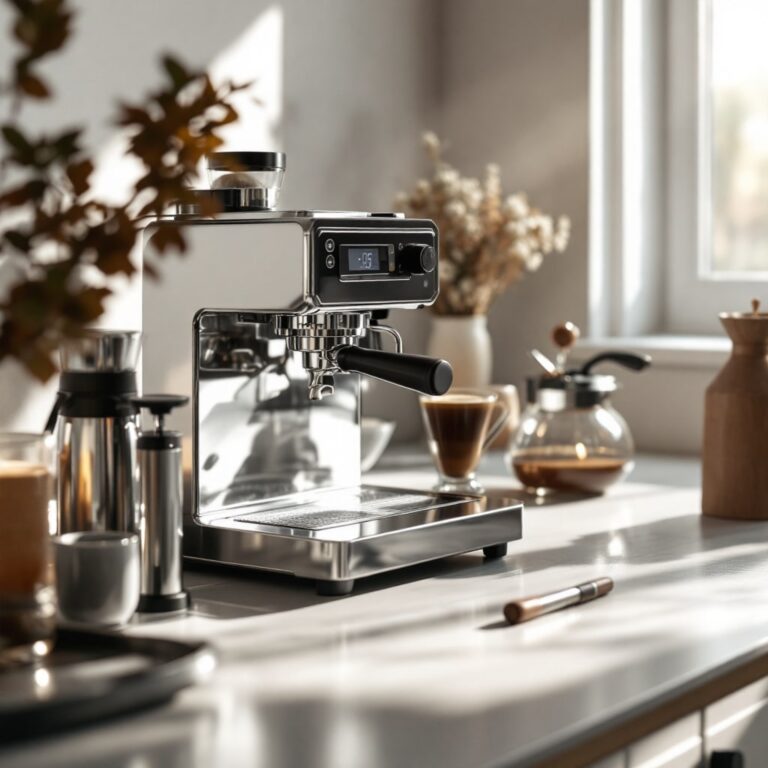
I’ll never forget the morning I tried to serve coffee to six weekend guests using my “12-cup” coffee maker. I’d done the math. Twelve cups, six people, two cups each. Perfect, right? Wrong. I ended up with barely enough coffee for four people drinking from normal-sized mugs, and two very disappointed in-laws nursing half-portions.
That embarrassing breakfast taught me something the coffee industry doesn’t exactly advertise: their sizing system is basically fiction.
If you’ve ever wondered what size coffee machine you need, you’re asking the right question but getting answers based on a measurement system that assumes we all sip from surprisingly tiny vessels.
In this coffee maker size guide, I’m going to expose exactly how manufacturers mislead you with cup capacities, give you a practical formula to calculate your actual needs, and break down recommendations by household type. By the end, you’ll know exactly what to buy. And just as important, what to avoid.
The Great Cup Deception: What ‘4-Cup’ and ’12-Cup’ Actually Mean in Real-World Mugs
Nobody mentions this about coffee machine cup capacity: a “cup” isn’t really a cup.
Industry standard for one “cup” sits at just 6 fluid ounces. Think about that. Your average coffee mug holds 10 to 12 ounces. And those travel beasts we all own? Sixteen ounces or more.
So when a manufacturer slaps “12-cup” on the box, they’re talking about 72 ounces total. That’s:
- 7 standard mugs (10 oz each)
- 6 large mugs (12 oz each)
- 4.5 travel mugs (16 oz each)
Suddenly that 12-cup coffee maker doesn’t seem so generous, does it?
Comparing a 4 cup vs 12 cup coffee maker gets even more absurd when you realize a “4-cup” machine makes just 24 ounces. Two modest mugs. Maybe two and a half if you’re seriously rationing.
What does 12 cup coffee maker mean in practice? Honestly, it means you can serve a family of four with normal drinking habits. Barely. And if anyone wants a refill? Time to start a second pot.
The 3-Question Formula: Calculate Your True Coffee Machine Size in 2 Minutes
Forget manufacturer cup ratings. This approach actually works:
Question 1: How many people drink coffee daily in your household? Count everyone who drinks at least one cup in the morning.
Question 2: What’s the average mug size you actually use? Measure your go-to mug. Most people underestimate this, so actually measure it.
Question 3: How many mugs does each person drink before leaving for the day? Be honest here. A few of us are one-cup sippers. Others (guilty as charged) need three before becoming functional humans.
The Formula: (Number of people) × (Mug size in oz) × (Cups per person) = Your minimum capacity in ounces
Then convert to manufacturer cups: Your minimum capacity ÷ 6 = The “cup” rating you need
Let me run through an example. A couple where both partners drink 12-oz mugs and each has two cups in the morning: 2 × 12 × 2 = 48 ounces needed 48 ÷ 6 = 8 “manufacturer cups”


This couple needs at least an 8-cup machine, not a 4-cup like they might’ve assumed.
Size-by-Scenario Breakdown: Right Size for Singles, Couples, Families, and Entertainers
Let me break down how to choose coffee machine size based on how you actually live.
Solo Coffee Drinkers
Living alone and drinking one regular mug daily? Technically you need about 10 to 12 ounces. A 4-cup machine (24 oz actual capacity) gives room for a second cup or an unexpected guest.
But my honest take: solo drinkers often do better with single-serve options. Brewing a full pot for one person leads to waste, stale coffee, and way more cleaning. For 2 people or fewer, the right choice is often no traditional drip machine at all.
Couples Without Kids
Two coffee drinkers typically need 30 to 50 ounces of actual coffee per morning session. In manufacturer terms, that translates to a 5 to 8-cup machine.
I’d lean toward a 10-cup for most couples though. Why? Enough for guests, enough for third cups on lazy weekends, and you won’t constantly push the machine to its limits. Machines last longer when they’re not always running at maximum capacity, something I’ve learned from years of troubleshooting stressed-out brewing systems.
Families of Four
Finding the best coffee maker for family of 4 really depends on whether the kids have discovered caffeine yet. Assuming two adults are primary drinkers, a 10-cup machine often works fine.
But families with teens who’ve found coffee, or households where extended family visits frequently, should jump to 12-cup minimum. A 14-cup model might be even better. Price difference is small, and you’ll avoid the second-pot scramble during chaotic school mornings. I’ve been there, and it’s not pretty.
The Entertainers
Do you host brunch? Serve coffee after dinner parties? Think about your entertaining habits, not just daily use.
Regular hosts serving coffee to groups of six or more will find standard home machines frustrating. Look at commercial-style machines with 14+ cup capacities, or get a second smaller machine for high-volume situations. Plenty of people keep a 4-cup for daily use and a 12-cup tucked away for gatherings. Smart move.
Single-Serve vs Drip: When Compact Machines Actually Make Sense
Debating single serve vs drip coffee maker isn’t really about which is “better.” It’s about matching the machine to how you actually live.
Single-serve wins when:
- Only one person drinks coffee
- Household members want different coffee types or strengths
- Coffee consumption happens at weird, irregular times throughout the day
- Wasting coffee or dealing with grounds drives you crazy
- Counter space is seriously limited
Drip wins when:
- Two or more people drink coffee at the same time
- Daily consumption exceeds 30 ounces
- Economics matter (and drip is way cheaper per cup)
- Brewing flexibility is a priority
- Environmental concerns about pods matter to you
Single-serve machines have a hidden cost that adds up fast. Pods run 40 to 70 cents each, sometimes more for premium options. Ground coffee for drip machines? Roughly 15 to 25 cents per equivalent cup.
For a two-person household drinking two cups each daily, that’s potentially $500+ per year difference. Over a five-year machine lifespan, you could buy a really nice drip machine and still come out way ahead.
But single-serve machines are dead simple to maintain, which extends their lifespan considerably. No carafes to crack, fewer internal components to fail, and descaling is usually straightforward. Convenience and longevity sometimes outweigh pure economics.
Small Kitchen Solutions: Best Compact Machines That Don’t Sacrifice Capacity
Living in a cramped apartment or dealing with limited counter space doesn’t mean settling for inadequate coffee capacity. A space saving coffee maker for small counter situations absolutely exists. Just know where to look.
The Vertical Strategy
Certain machines build up instead of out. Thermal carafe models often have smaller footprints than glass carafe versions because they eliminate the warming plate. Trading a few inches of height for valuable counter real estate is usually worth it.
Under-Cabinet Mounting
Certain 10 and 12-cup machines are designed for under-cabinet installation. Brewing mechanisms tuck beneath your cabinets, leaving only the carafe on the counter. Got 12+ inches of clearance under your cabinets? Definitely worth exploring.
The best coffee maker for small kitchen considerations:
- Look for machines with smaller footprints relative to their capacity
- Cord storage reduces clutter (small thing, big difference)
- Removable water reservoirs make refilling easier in tight spaces
- Consider machines with built-in grinders if you’d otherwise need separate equipment
I’ve seen plenty of small kitchens where people bought undersized machines thinking they needed the space savings, only to realize they were running two or three brew cycles every morning. Actually uses more counter time than having a properly sized machine would. Ironic, right?
Let’s bring this all together with a simple decision framework for figuring out what size coffee machine works for you.
Quick Reference Checklist:
Step 1: Calculate your household’s actual daily ounce consumption Use this formula: People × Mug size × Cups per person
Step 2: Convert to manufacturer cups Divide your total ounces by 6
Step 3: Add a buffer Multiply by 1.25 for occasional extra cups or guests
Step 4: Factor in usage patterns
- Infrequent drinkers: Consider single-serve
- Daily household brewing: Drip makes sense
- Heavy entertaining: Get the bigger machine
My Top Picks by Category:
- Solo drinkers: Single-serve pod machine or 4-cup with thermal carafe
- Couples: 8 to 10-cup drip with programmable features
- Families: 12-cup minimum, thermal carafe recommended
- Entertainers: 14-cup or dual-machine setup
Final Reality Check:
When in doubt, go one size up from your calculation. Machines running at 70% capacity last longer than ones constantly pushed to maximum. Price difference between sizes is usually pretty modest, and the convenience difference when you need extra capacity? Priceless.
Don’t let manufacturer cup math trick you into buying a machine that can’t actually serve your needs. Do the real math, buy accordingly, and save yourself from ever disappointing your in-laws with half-portions again.