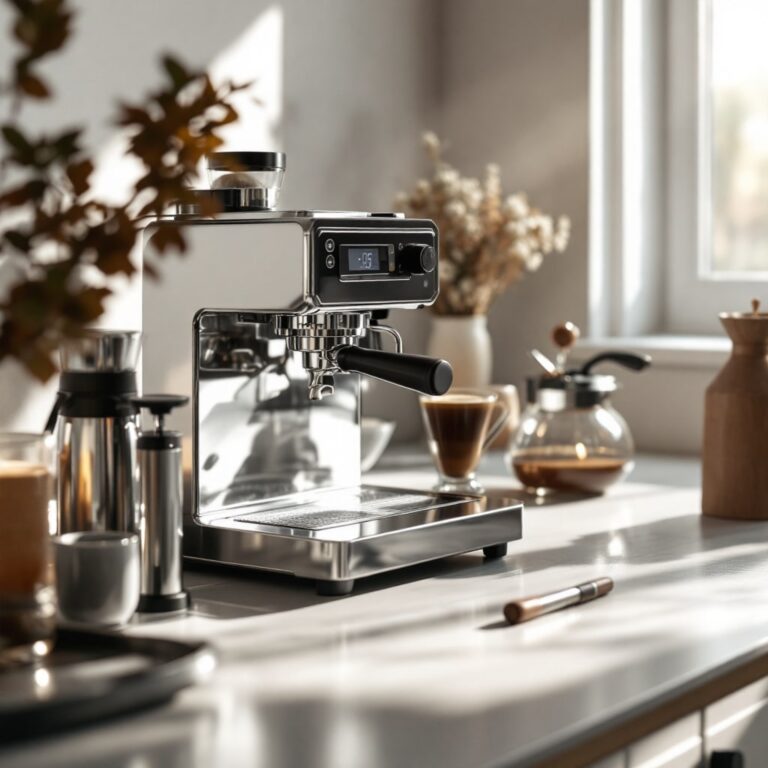
When I first unboxed the Philips 3200 LatteGo, I thought I already knew what I was getting. Every shiny new coffee machine feels amazing during week one. But most reviews stop there, and that honeymoon phase hides a lot. This Philips 3200 LatteGo review comes after six months of daily use in my home office, so what you’re getting here is the real story. The good. The annoying. The part where the machine finally settles into its long-term personality.
Short-term reviews tend to focus on features. Long-term use reveals habits, quirks, and those slow changes in performance that you only notice because you’re using the machine twice a day while trying to start work on time.
Since I write about compact and office-friendly coffee machines for a living, I pay extra attention to daily workflow. Does the machine interrupt my morning rhythm? Does it fit the vibe of a clean, minimal kitchen? Does the maintenance pile up? And does the coffee stay consistent after hundreds of cups?
Those are the questions I’ll answer in this Philips 3200 LatteGo full review and rating.
First Impressions vs. Month 6: What Changed and What Surprisingly Didn’t
When I first set up the 3200, I loved how small and simple it looked. Push a button, get a cappuccino. No manual frother to fiddle with. No tubes. It felt almost too easy.
Six months later, a few things shifted.
What stayed the same:
- Still one of the easiest machines to use at 6 AM
- Still compact enough that it doesn’t dominate the counter
- Still surprisingly quiet, especially compared to older Saeco models
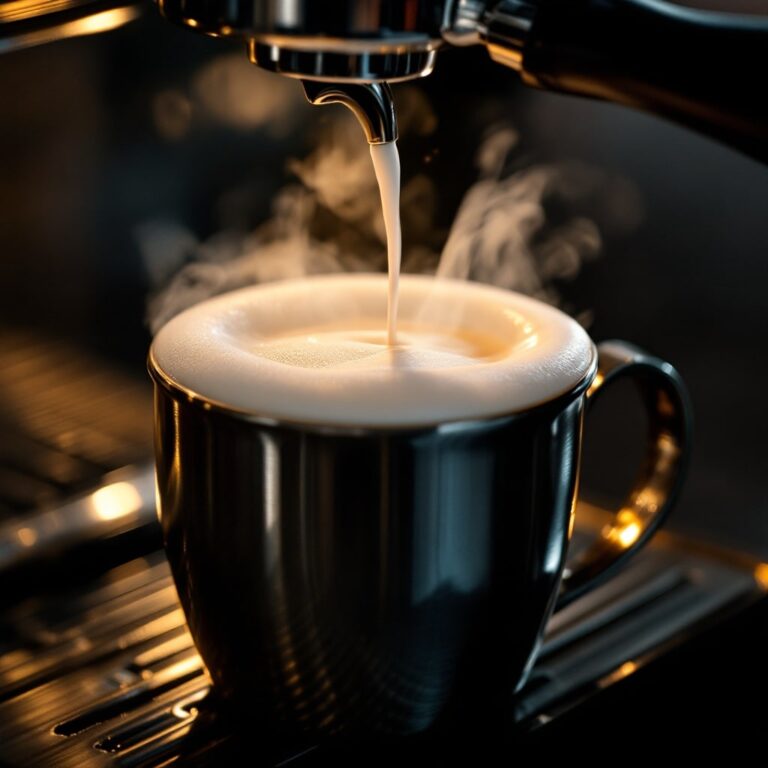
- Still produces a reliable foam texture for cappuccinos and lattes
What changed:
- Espresso strength felt a bit weaker after around 250 cups
- Grinder needed more frequent attention than I expected
- The water tank felt smaller and smaller as my coffee habit grew
- LatteGo parts got slightly looser but still locked in safely
The machine didn’t fall apart, which I can’t say for every fully automatic I’ve tested. But it also didn’t stay perfect. I’ll explain how I adjusted settings to fix the espresso strength drop later on.
LatteGo Milk System Deep Dive: Long-Term Cleaning Reality and Foam Quality Over Time
Most people searching for a Philips LatteGo milk system review want one thing: honesty about cleaning. Because that’s where a lot of machines fail.
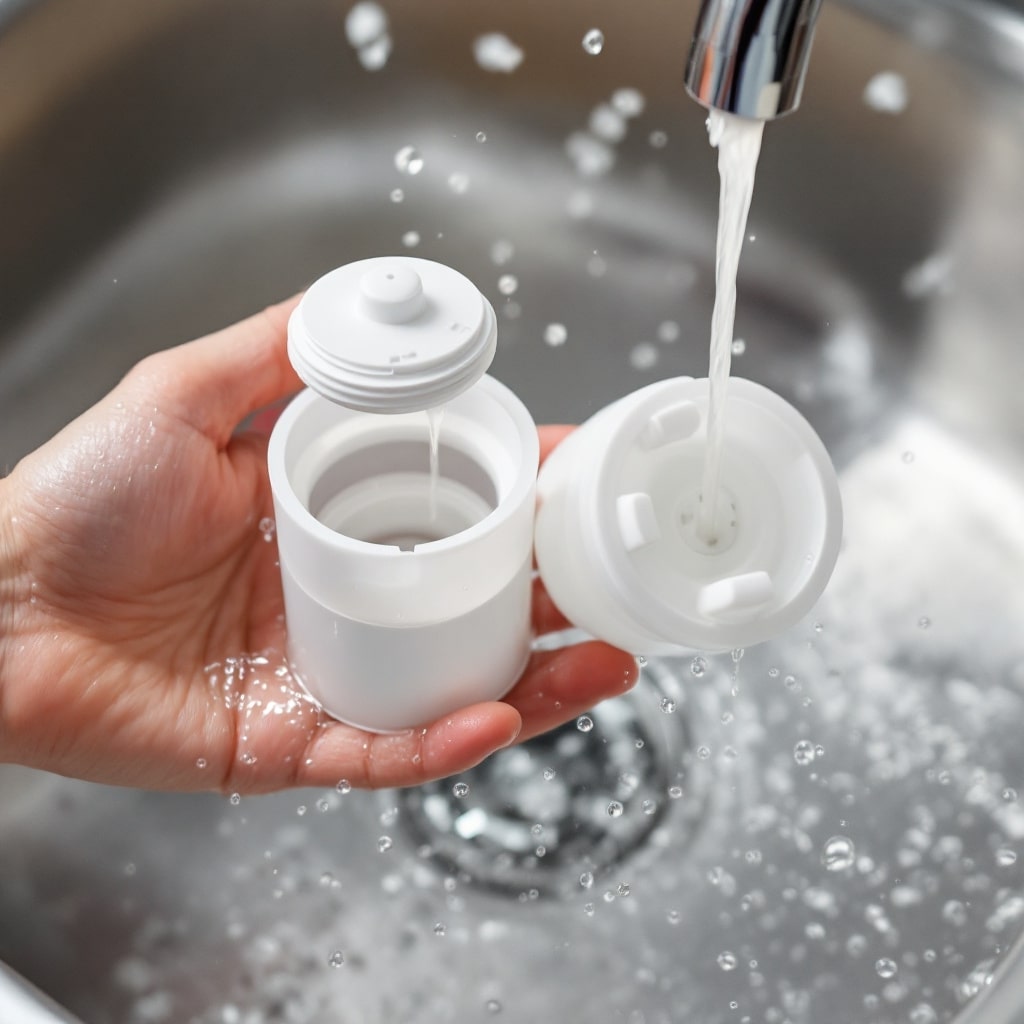
I’ll keep it real: the LatteGo is the easiest milk system I’ve ever dealt with.
Two pieces. No tubing. Rinse and done.
But here’s the part short-term reviewers miss.

After six months:
- The silicone seal on the lid needed a deeper scrub once a week
- Milk residue began to build up in the bottom corners if I skipped one cleaning
- The plastic picked up tiny scratches from dish sponge use
This didn’t impact foam quality, but visually, you can tell the parts look more lived-in.
Foam consistency:
- Weeks 1 to 8: fluffy and dense
- Months 3 to 6: slightly lighter foam on oat and almond milk, still great on dairy
- On cold mornings: foam drops unless the milk is pre-chilled
I still consider the milk system the highlight of the machine. Nothing’s broken. Cleaning takes under 20 seconds on normal days, which is rare with super-automatics.
Espresso Quality Secrets: Best Settings for Stronger Shots Most Owners Never Find
Let’s talk espresso, because this is where most long-term Philips 3200 owners start searching for help.
Around cup 200, I noticed a mild drop in intensity. Not dramatic, but enough that my morning flat white felt softer than usual.
Here’s what fixed it.
My best settings for Philips 3200 LatteGo espresso:
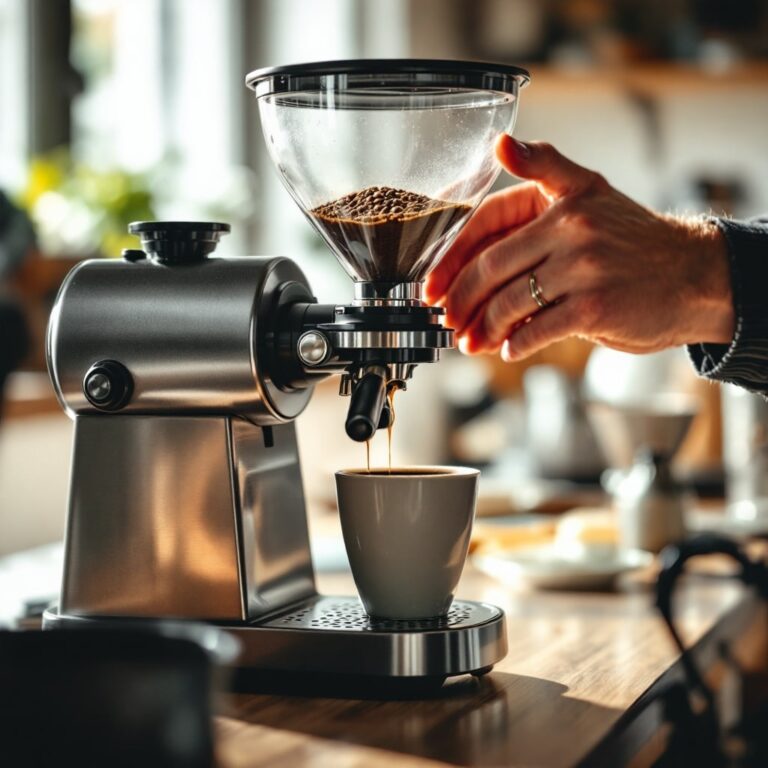
- Grinder: level 2 (finer than the default)
- Strength: max
- Brew volume: reduce by about 10 milliliters
- Coffee type: use medium to dark roast for this machine
A lot of people leave the grinder too coarse. The machine is forgiving, but if you want stronger espresso with the Philips 3200, the grind setting is the secret weapon.
I also learned that running a cleaning cycle before adjusting the grinder helps the burr move smoothly. The machine actually performs better when you adjust settings during a brew, not when idle.
The Real Maintenance Burden: Cleaning Schedule, Descaling Costs, and Part Replacements
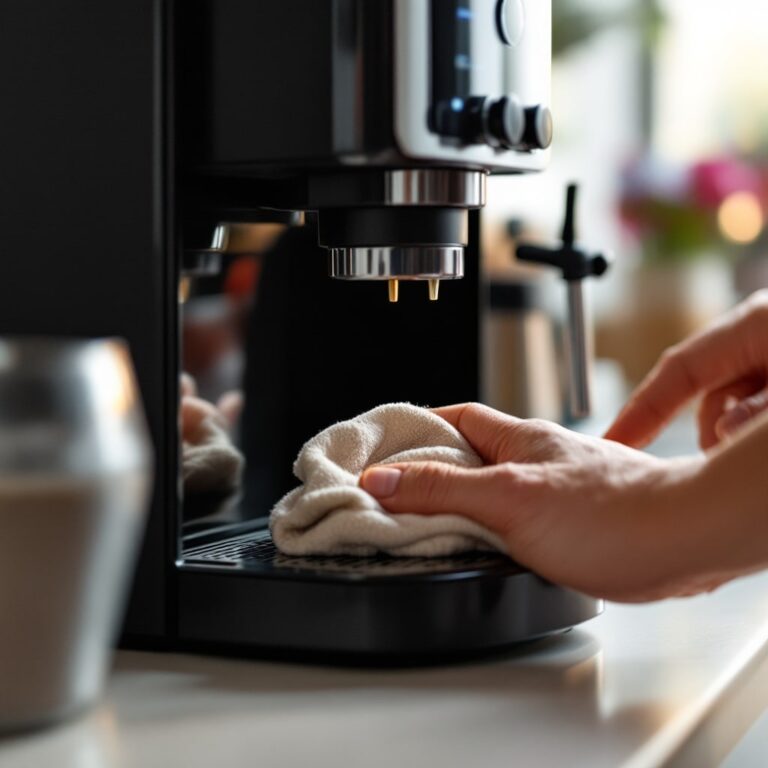
People often ask about Philips 3200 LatteGo maintenance and cleaning tips. After six months, I’ve built a routine that keeps the machine happy without feeling like a chore.
My real weekly schedule:
- LatteGo parts: rinse after each use, proper wash twice a week
- Brew group: rinse every 3 days, deep clean monthly
- Drip tray: every 2 days because it fills fast
- Grinder: brush out once a month
- Water tank: daily refill, weekly scrub
Descaling:
- Philips pushes AquaClean filters hard, and honestly, they help
- I used two filters in six months
- Total cost: roughly $24


If you skip the filter, expect to descale every one to two months depending on your water hardness.
Part replacement:
- No replacements needed yet
- LatteGo lid seal may need swapping around month 12 based on feel
This is one of the easiest machines to maintain for its category, which matters a lot for anyone using it in an office or busy home.
Is the Philips 3200 LatteGo Worth It? Breaking Down Cost Per Cup After 500 Drinks
When someone asks me if the Philips 3200 LatteGo is worth it, I always do a quick cost-per-cup breakdown. Because numbers make the decision clear.
My real usage:
- Around 500 drinks in six months
- Machine cost: around $800 when I bought it
- Maintenance cost: around $40 total
- Coffee beans: varies; mine average $17 per 2 pounds
Cost per cup after 500 drinks:
- Machine amortized: around $1.60 per cup
- Beans: about $0.25 to $0.35 per cup
- Maintenance: around $0.08 per cup
Total: roughly $1.95 to $2.10 per cup
That’s still cheaper than any café trip, and I’ve saved hours by not leaving my desk during workdays.
If you mostly drink milk-based coffee, the machine pays for itself quickly. If you stick to straight espresso, the math still works but takes longer.
After half a year, the Philips 3200 still sits on my counter and still gets used twice a day. That alone says a lot. It’s not perfect, and the espresso strength drop around month three surprised me, but the machine is easy to adjust and even easier to live with.
Who should buy it:
- Anyone who wants a latte or cappuccino at the press of a button
- People who want minimal cleaning
- Small offices that need something hassle-free
- Apartment kitchens with limited counter space
Who should skip it:
- Hardcore espresso drinkers who want café-grade shots
- Anyone who hates refilling a small water tank
- People who prefer manual control over milk texture
If you fall in the first group, I think this machine is one of the best lifestyle-friendly options right now. And if you want to compare it with alternatives, consider reading [Link: comparison of compact latte machines] next.
If you were looking for a Philips 3200 LatteGo review that reflects real daily use, I hope this helped you understand what this machine is actually like once the novelty fades.